Walk Behind Scrubber Dryers in Ras Al Khaimah
When a floor's appearance matters to the business, cleaning equipment must be assessed for the finish as well as the dirt. A lobby, showroom or reception can contain surfaces that need a different approach from service corridors. Choosing a stronger machine setting or a more aggressive pad without understanding that finish can create work the cleaning routine was meant to avoid.
Dubai Cleaning Equipment helps Ras Al Khaimah buyers compare walk behind scrubber dryers for defined floor care tasks. Identify the material, finish and type of soiling first. Then discuss the machine together with the working component, solution and method rather than expecting the equipment name alone to establish surface compatibility.
What floor information should you provide?
Describe the floor material as precisely as possible and include any care guidance supplied for its finish or coating. A broad description such as stone or industrial flooring may conceal important differences. Photographs can explain layout and visible condition, while product or installer information may be needed to identify an appropriate cleaning combination.
Separate ordinary maintenance cleaning from restoration or treatment of a persistent mark. A scrubber should not be purchased against an assumption that every stain, scratch or change in shine is removable dirt. Where the condition is uncertain, arrange suitable assessment so the cleaning target is realistic before equipment is selected.
How can Ras Al Khaimah properties define separate routes?
A hotel or accommodation property can review public floors and service areas individually. The visible finish in a lobby may be a key requirement, while service corridors present a different soil load. List both during the enquiry and ask which working components are appropriate. Shared ownership of one machine does not require identical tools for every area.
A showroom can assess the route with display units and furniture in their normal positions. Ask whether the operator has room to turn and whether separate edge work remains necessary. Floor appearance should be reviewed through the whole accessible route, including turns and changes in finish, rather than only a cleared central patch.
A commercial building with mixed hard flooring should identify transitions between materials. Check how the cleaning plan will manage those changes and where a different method is required. Define the route so the machine is used within its confirmed application instead of continuing across every surface simply because it is on the same level.
Which listed models can you compare?
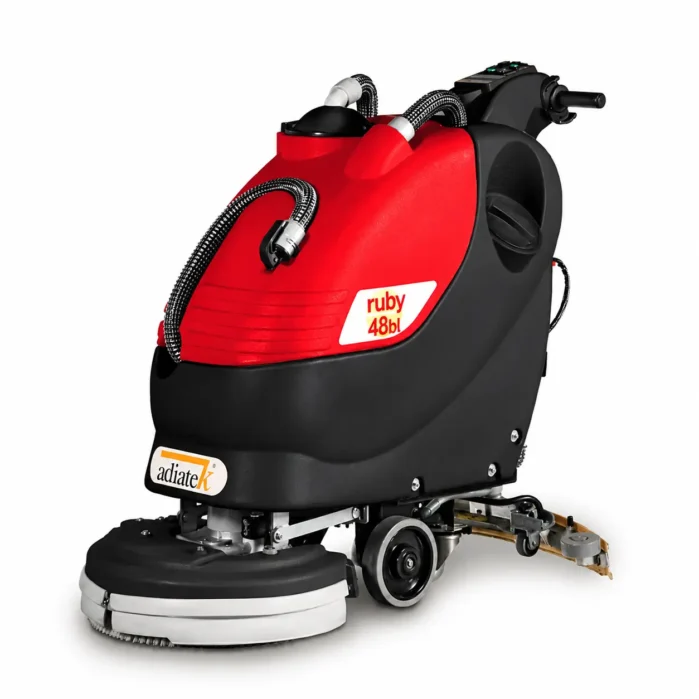
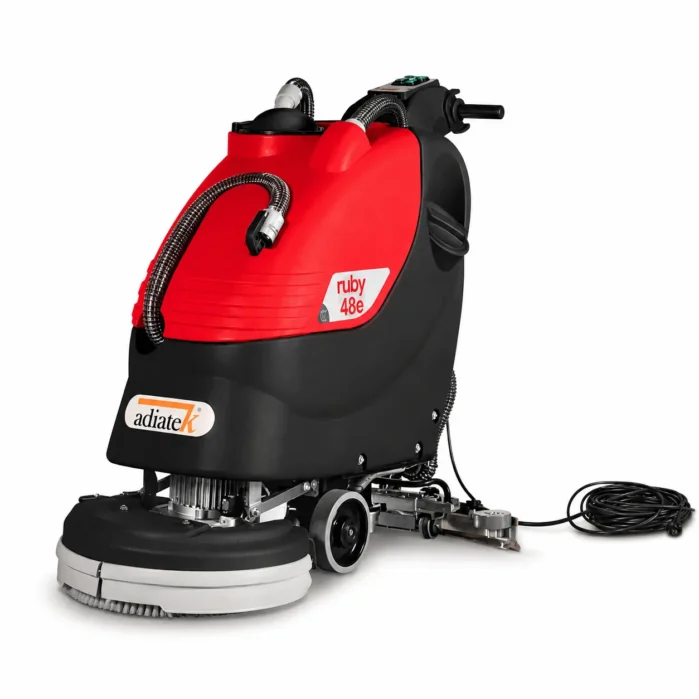
The Ruby 48E floor scrubber has a listed 485 mm cleaning width and uses cable power. It is a reference option where the premises can support a suitable electrical and working arrangement. Confirm the full dimensions and the supplied brush or pad configuration for the intended finish.
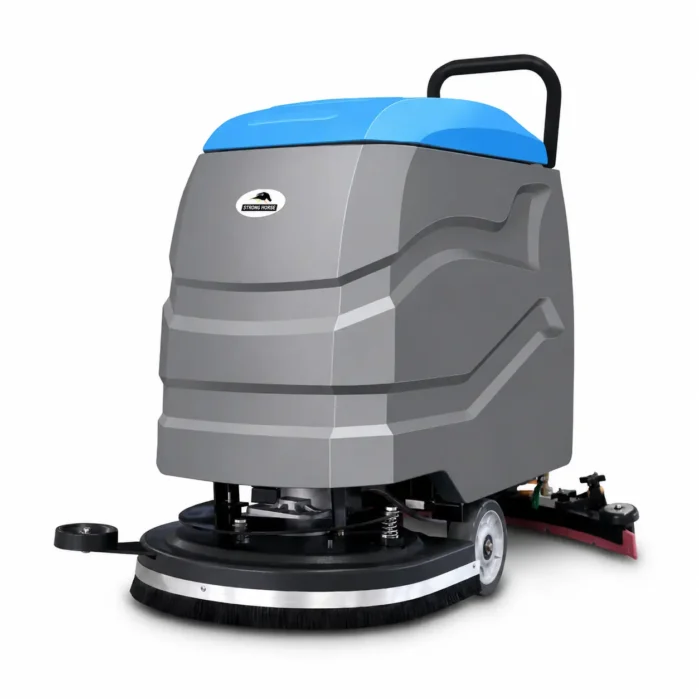
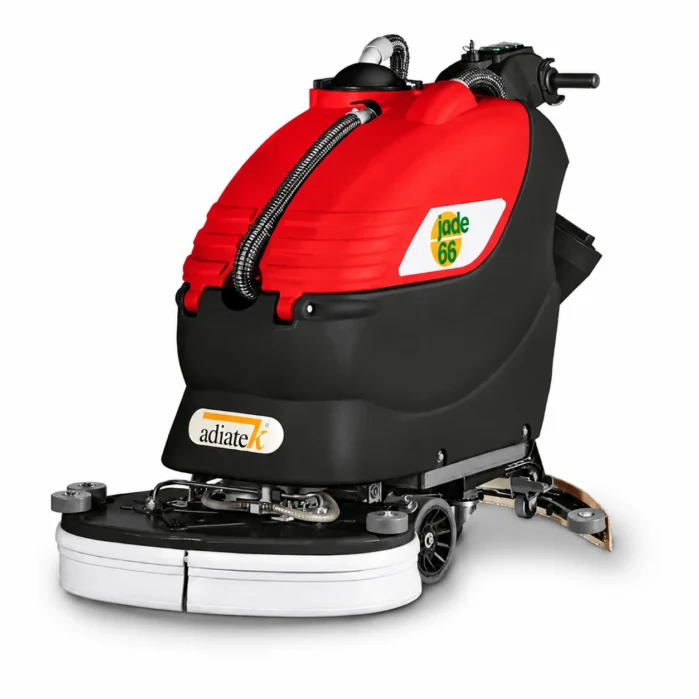
The Jade 66 lists a 660 mm cleaning path and 53 litre solution tank. It provides a wider-format comparison for suitable open areas. Ask about the complete operating envelope and offered power package, then assess whether the route can use that width without compromising access around fittings.
Use the same floor care brief when discussing both models. Ask DCE to identify compatible working components and any need for a separate assessment. A larger machine may be relevant to clear floors, while a narrower option may better suit another route. The selection should follow the surface and layout rather than a prestige or size preference.
How should a finish assessment be carried out?
Where appropriate and available, agree a representative test area and compatible method before a demonstration. Consider the cleaning result, recovery and any change in appearance under comparable viewing conditions. Use the floor care guidance when deciding how to proceed. A satisfactory small assessment should inform the plan without becoming a blanket claim for every other finish in the property.
Discuss solution and working component choices explicitly. More chemical or greater abrasion is not automatically more effective maintenance. Follow the relevant instructions and ask for clarification where the floor condition is unfamiliar. Correct preparation and equipment care also affect recovery and consistency, so the assessment should include the proposed routine.
For tasks involving polishing or restoration, review suitable single disc floor machines as a separate equipment discussion. Ordinary dry debris may require commercial vacuum equipment before washing. Keeping these processes distinct helps the property purchase machinery for a clear role instead of describing every appearance issue as daily scrubbing.
How can you protect consistency after handover?
Identify approved working components for each confirmed floor route and keep their references accessible. Staff need to recognise the correct tool, not choose by colour or appearance alone. If different components are used, organise them so replacement and selection do not depend on one experienced operator being present.
Follow the model instructions for maintaining the brush, recovery components and tanks. A changed cleaning result should prompt a review of setup, component condition and surface conditions. Record relevant observations and seek support where needed. Avoid responding to every streak or remaining mark by increasing cleaning intensity before the cause is understood.
What should the purchase and running cost include?
Request the exact equipment configuration, essential accessories and applicable tax. Where relevant, identify the battery and charger supplied. Ask for replacement working and recovery component references, with current prices and availability. A complete comparison should show what is required to maintain the intended routine after the first use.
Include preparation, storage and care in your operating plan. If a demonstration or familiarisation session is requested, agree its scope and any charge separately. Discuss warranty coverage and the support process for the selected model. These practical details help a property assess ownership without relying on an unverified promise about floor life or labour savings.
How should delivery in Ras Al Khaimah be arranged?
Share your address, receiving times and any access restriction with DCE. Confirm availability, delivery timing and applicable charges in the quotation. Identify who will check the supplied components and retain the documents, particularly if purchasing and the operating team work from different locations.
Use the technical data sheet section to review available information and request the exact manual. Keep the machine identification and floor care notes with your equipment records. Ask how service enquiries, inspection and any transport requirements would be handled from your site before relying on a particular arrangement.
Questions from Ras Al Khaimah property buyers
Can the same pad be used on every hard floor?
Only where that use has been confirmed appropriate for the surfaces, finish, machine and solution. Different floors may need different components or methods. Identify the actual materials before simplifying the equipment package to one universal arrangement.
Will a scrubber remove scratches and restore shine?
Those conditions may fall outside maintenance cleaning. Assess the floor and distinguish removable soiling from wear or damage. Restoration or polishing can need a separate process and equipment; the scrubber should be selected for the task it can actually perform.
Why assess recovery on a decorative floor?
Remaining moisture or residue affects the visible result and how the area is managed after cleaning. Review the actual surface, setup and route. Use those observations to plan the method rather than assuming every machine and finish combination behaves identically.
Should operators change settings when a mark remains?
First review the material, working component and approved method. The mark may need different assessment rather than greater intensity. Follow instructions and seek advice where the condition is unclear so the response fits the surface and task.
Request a Ras Al Khaimah floor care quotation
Send DCE your floor material, finish information and photographs of the intended route. Contact +971 4 2380192 or dcecare@cleantech-gulf.com for a current equipment offer. Include the delivery address and any assessment requirements so the proposed package can be reviewed against your property's floor care needs.