Walk Behind Scrubber Dryers in Ajman
For a small business moving from manual floor washing to a machine, the first question is often price. The more useful starting point is which part of the current routine needs to improve. Repeated refilling, difficulty reaching around fixtures and time spent recovering dirty water point to different buying requirements. A clear description of that problem helps avoid paying for capacity the premises cannot use.
Dubai Cleaning Equipment offers walk behind scrubber dryers for Ajman buyers comparing their first commercial floor machine. Measure the accessible route, identify the floor finish and decide when cleaning can take place. Those details help narrow the equipment choice before comparing the complete purchase packages.
Which part of your present routine needs attention?
Observe a normal cleaning session and record interruptions. Does the operator spend most of the time washing open floor, moving furniture or walking to the service point? A larger machine may reduce passes on clear sections, but it will not remove a fixed obstacle or shorten the route to the filling area by itself.
Also record areas that need a separate method. Edges, spaces beneath fittings and unsuitable surfaces may remain outside the machine route. Defining those tasks helps you estimate the scrubber's actual contribution. It also keeps the purchase comparison fair when a demonstration covers only the accessible central area.
How can different Ajman premises assess their first machine?
An independent retailer can start with the floor available after displays and stock are in place. Check the width around counters and the turn at aisle ends. A machine that fits through the entrance still needs room to work. Compare the full operating dimensions with the daily layout, including the squeegee and operator space.
A small office or service business should look at its storage and power arrangements. If the equipment remains in one building, a suitable cable machine may be worth assessing. If cleaning moves between sections without convenient sockets, discuss the requirements of a battery option. Neither choice should be made from purchase price without checking the working route.
A cleaning contractor purchasing for one Ajman contract should base the specification on that committed workload. Confirm who provides storage and how the machine will be moved if necessary. Extra prospective contracts may influence future planning, but they should not be treated as assured work when justifying a larger first purchase.
Which models provide useful starting points?
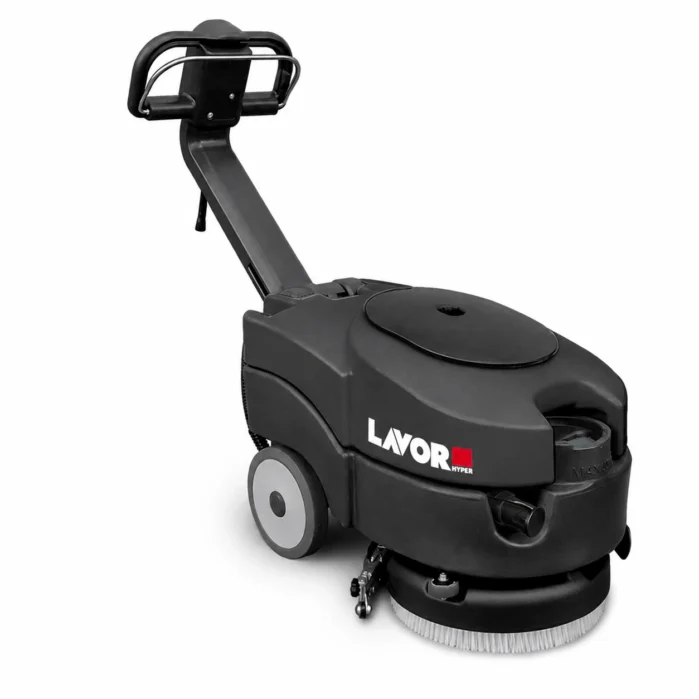
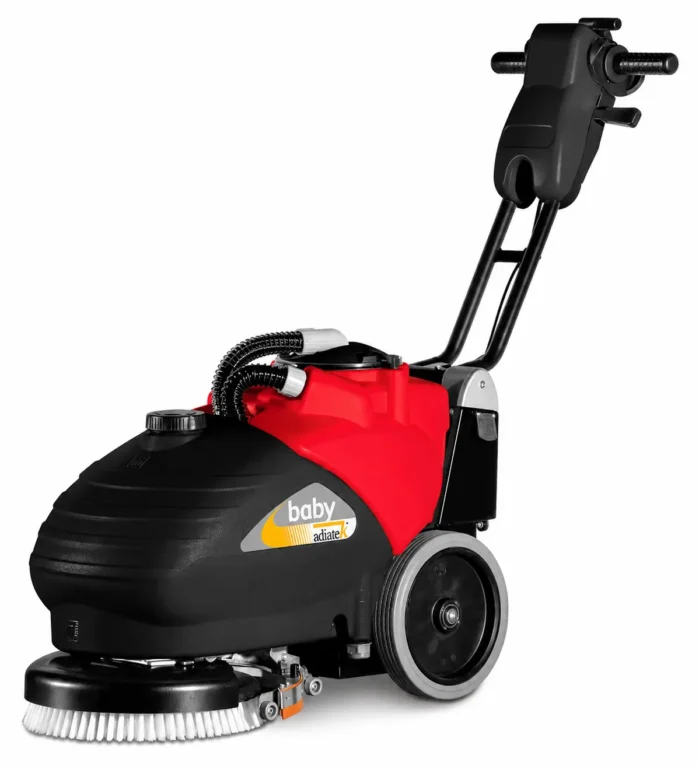
The Baby floor scrubber has a listed 410 mm squeegee and offers a smaller-format reference for access discussions. Ask for current dimensions, handling information and the exact supplied package. Confirm that it suits the intended floor and workload, rather than choosing it simply because the premises are described as small.
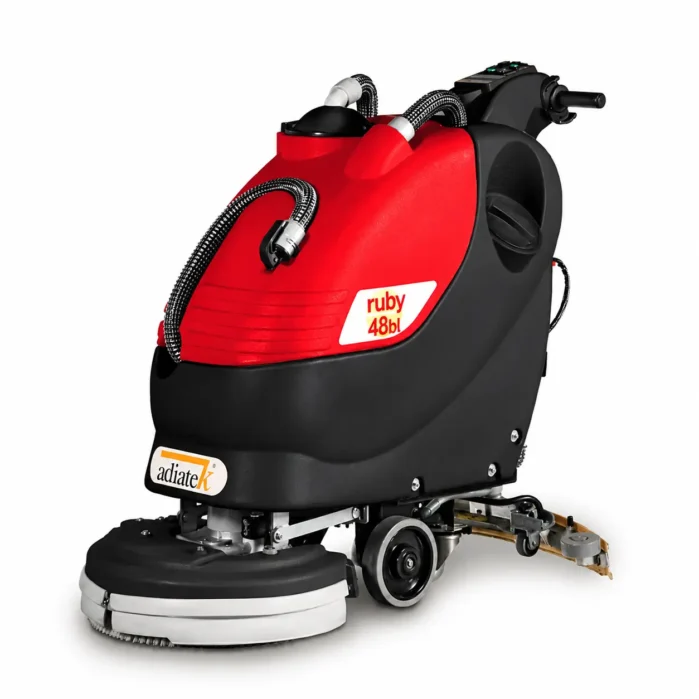
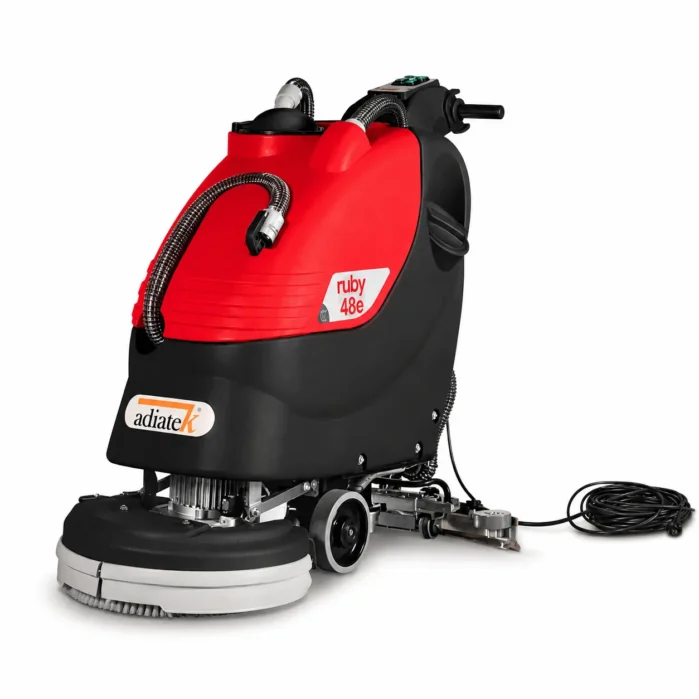
The Ruby 48E is a cable-powered option with a listed 485 mm cleaning width. Review it where the available supply and working arrangement support that format. Ask about the complete operating envelope and included brush or pad arrangement so the price comparison covers equipment you can actually use.
Describe the same normal working session when discussing both machines. Include access, typical soiling and where filling and emptying take place. This gives DCE a useful basis for explaining differences in handling and configuration. A model recommendation should connect to a recurring task rather than a generic business size label.
How should you compare cable and battery arrangements?
A cable-powered machine needs a suitable electrical supply and a practical route for the work. Review socket positions and the site's procedure for managing the area. Ask for the actual electrical requirements and cable information for the offered unit. Do not assume that every accessible outlet or extension arrangement is suitable.
For a battery option, ask which battery and charger are included and how charging should be arranged. Consider whether the available time between cleaning sessions fits the supplied configuration. Operating time depends on the machine and use conditions; avoid converting a quoted maximum into a guaranteed working period for your premises.
The floor itself still needs assessment with either power arrangement. Select a compatible working component and solution for the finish. If ordinary loose debris requires preparation, review suitable commercial vacuums or walk behind sweepers for that stage. A scrubber's role is easier to budget when the complete process is defined.
What does the full first purchase cost include?
Ask for an itemised quotation showing the machine, applicable tax and all essential working accessories. Identify any pad holder, pads, brush, battery and charger where relevant. Ask which items are optional. Comparing two headline prices is unreliable if only one includes the equipment needed for the agreed task.
Discuss replacement squeegee rubbers and other consumables used by the model. Add routine preparation and maintenance time to your own operating assessment. The aim is to understand the ongoing arrangement, not to assume a universal payback period. Any comparison with manual cleaning should use your actual tasks and observed working conditions.
How can a demonstration help a first time buyer?
Where available, ask to review a representative compatible floor and the route that causes difficulty today. Include preparation, turns and recovery observations. The intended operator should assess handling as well as the visible result. A useful session answers specific buying questions instead of presenting a broad claim that the machine will solve every floor problem.
Ask about model instruction and retain the exact manual. The equipment will need end-of-task care and suitable storage even if the controls appear straightforward. Planning those duties before purchase helps the business keep the machine ready, with responsibility shared clearly between the user and the person who manages purchasing.
What should be confirmed for delivery in Ajman?
Provide DCE with the address, receiving hours and any access restriction. Confirm availability, delivery timing and applicable charges in the quotation. If the machine is being delivered directly to a customer site, identify who accepts it and how the accessory list and documents will reach the responsible operator.
Review available references through the technical data sheet section and clarify warranty coverage and service arrangements. Keep model identification and purchase details accessible for later support. Ask how an inspection or transport requirement would be handled from your location before relying on any particular service arrangement.
Questions from Ajman first time buyers
Is the lowest priced machine the best starting point?
Choose a package that fits the floor, route and work required. A lower price may be attractive, but missing accessories or unsuitable access can limit its usefulness. Compare complete compatible configurations before deciding which purchase offers practical value to the business.
Can we use a scrubber without changing our cleaning routine?
The machine may change preparation, working routes and end-of-task care. Follow its instructions and plan those duties. Review which manual tasks remain so your schedule reflects the complete job rather than assuming every existing step disappears.
Does battery power remove the need for a power plan?
It changes the plan. The machine still needs the correct charging arrangement and time between uses. Confirm the supplied battery, charger and instructions, then compare them with the premises and operating schedule before placing the order.
What should we measure before requesting a quote?
Record the narrowest working spaces, turns, doorways and storage route. Add the actual accessible floor area and service point location. Photographs can help explain the layout, especially where counters or permanent fittings restrict machine movement.
Request your Ajman scrubber dryer quotation
Contact +971 4 2380192 or dcecare@cleantech-gulf.com with your floor finish and the problem in your current routine. Ask DCE for a current equipment and accessory offer. Include route measurements and your delivery address so the first purchase can be assessed against a clear, practical task.