

Your cart is empty
You may check out all the available products and buy some in the shop
Return to shopWhen a small facilities team shares carpet equipment across several buildings, the difficult part can be knowing what happened during the previous shift. A machine has moved, a room still needs checking, or a reported fault has not reached the supervisor. Buyers comparing carpet dryers in Umm Al Quwain should plan equipment custody and room status alongside the purchase itself.
Dubai Cleaning Equipment's carpet dryer range offers an air mover option to review for suitable post-cleaning applications. Explain who uses the equipment, where it will travel and how rooms return to service. A practical proposal should fit those responsibilities so the machine becomes part of a consistent routine.
Equipment shared informally can be difficult to account for. One operator may know that a blower needs inspection, while another sees only that it is available in storage. Assign responsibility for receiving, checking and preparing the package so its condition is visible before the next cleaning visit.
Keep the room record separate from the equipment inventory. A machine being returned does not prove that the room has been checked, just as a room being released does not prove that all accessories are back in storage. Both decisions need a named responsible person within the cleaning routine.
For buildings with different contacts, agree how the supervisor receives status updates. A brief record identifying the room, completed stage and remaining checks is more useful than several informal estimates. The aim is reliable communication that staff can maintain during a busy shift.
Identify the carpet system, room layout and period available for preparation, cleaning and assessment. Record any furniture or access restrictions. Do not assume that a routine developed for one building applies unchanged to another simply because both have a similar amount of carpet.
Confirm the intended electrical arrangement before allocating equipment. Where machines move between sites, the same compatibility question needs to be considered for each destination. General statements such as power available do not establish that the actual unit can be connected appropriately at the intended position.
Clarify who authorises reopening and how unresolved conditions are reported. Staff should know the next step if an area remains damp or behaves differently from expectations. Air movement supports a process; it does not replace a decision about whether the carpet and room meet the agreed release requirements.
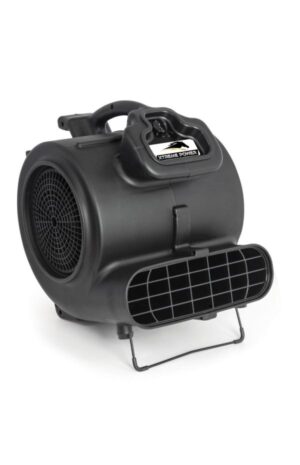
The PDS1-2UK air blower is the listed model to ask about. Obtain its current package details and matching instructions so the shared equipment record identifies the actual unit rather than a general description such as carpet fan.
The published listing states 120 V. Confirm the supplied electrical version in writing and resolve compatibility with each intended location before use, with qualified assessment where necessary. This detail belongs in the allocation plan because moving equipment to another building does not change its electrical requirements.
Ask how to identify the machine for technical support and which routine care tasks apply. Keep the manual available to every authorised operator. When the team acquires another unit, record its own identification rather than assuming that similar appearance guarantees an identical supplied configuration.
Review extraction first. An air mover circulates air across an appropriate surface but does not collect liquid through suction. The carpet system, cleaning method and moisture left after extraction all influence what the later drying stage needs to achieve.
Where the current cleaning process needs assessment, compare suitable carpet extractors for the actual task. Include staff technique and the material's instructions in that review. Buying another blower should not become an automatic response to an extraction problem that has not been understood.
Circulation also does not remove water vapour from the room by itself. Appropriate ventilation or dehumidification may require separate consideration according to conditions. Coordinate any changes with the building contact and assess the actual room instead of relying on the drying time recorded elsewhere.
The outgoing team should record where equipment remains, what stage each room has reached and who performs the next check. Keep the status specific. A note saying cleaning finished can be ambiguous when extraction is complete but drying assessment and reinstatement remain outstanding.
The incoming operator should review that record before moving a machine. Transferring a unit to the next building should follow the agreed process for the original room and the required inspection of the equipment. Vehicle departure time alone should not determine whether a blower is removed.
Plan handling and cable organisation for each move. Equipment should reach the next work area through an assessed route, with accessories accounted for and any reported fault visible. A return check prevents an incomplete package from being passed onward simply because the previous visit has ended.
Request an itemised quotation showing the confirmed version, quantity, delivery terms and any familiarisation. Explain the actual sharing arrangement so the supplier can review a realistic application. Simultaneous demand and movement time are more useful than choosing quantity from the number of buildings alone.
Ask how technical enquiries, warranty matters and replacement part requests are handled. Retain the written terms with the model details. A supervisor should be able to report an issue using the supplied unit's identification even if the operator who first noticed it is working at another premises.
Provide the Umm Al Quwain delivery address, unloading access and receiving contact. Confirm current availability, charges and expected timing in writing. The download centre can help with supporting literature, while the supplier should confirm the correct manual and any handover arrangements for your order.
No automatic conclusion follows from the equipment location. The room needs its own assessment and release decision. Keep room status and equipment custody visible so one completed action is not mistaken for proof that all stages of the cleaning programme are finished.
Use previous records as context, not as a guarantee. Carpet construction, remaining moisture and indoor conditions can differ. Review the actual room and retain an inspection stage before reopening, even when a similar task was completed more quickly at another premises.
Identify each room, the stage completed, equipment still operating and the person responsible for the next check. Include any fault or unexpected condition. A concise factual update is easier for the next team to act on than a broad statement that the work is almost done.
Assign that responsibility within the team and retain the model information needed to check compatibility. Physical similarity is not sufficient. A named custodian can coordinate supplier enquiries and keep the shared equipment record current when the original package changes.
For carpet dryers in Umm Al Quwain, send your building sequence, carpet information and team handover routine. Call +971 4 2380192 or email dcecare@cleantech-gulf.com for current equipment details, confirmed electrical requirements and an itemised quotation for your facilities team.
You may check out all the available products and buy some in the shop
Return to shop